Statistics-Population(N) & Sample(n)
Understanding Sampling Methods for Accurate Research and Decision-Making
Population(N):
The population is the entire group of people, things, or events that you want to study.
For e.g. If you’re researching favorite ice cream flavors, the population could be all the kids in your city.
Sample(n):
A sample is a smaller group selected from the population that you actually study or a subset of population.
For e.g. Instead of asking every kid in the city, you might ask 100 kids from different neighborhoods. And..That group of 100 kids is your sample
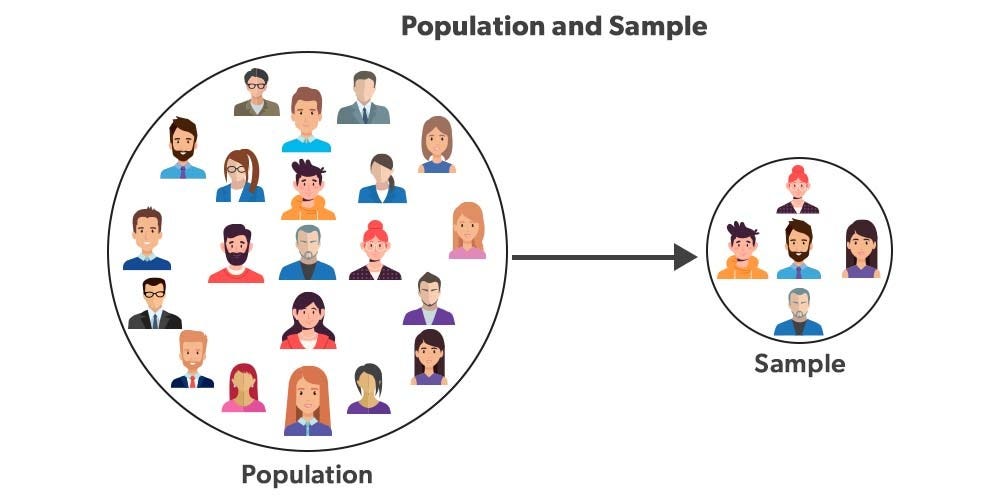
The goal of sampling is to create a sample that is representative of the entire population.
Real-world use cases using Population(N) and Sample(n):
1. Market Research for Product Launch
- Population: All potential customers who could be interested in the product (e.g., all people in a country or a specific age group).
- Sample: A selected group of individuals (e.g., 1,000 customers from different regions, demographics, etc.) who are surveyed to understand preferences, price sensitivity, or buying habits.
- Use Case: The company can’t survey the entire population, so they collect data from the sample( selected group of individuals) and use it to predict the behavior of the overall population.
Symbols:
- Population Size:
Represented by N.
Example: If there are 10,000 people in a city, the population size is N = 10,000. - Sample Size:
Represented by n.
Example: If 500 people are selected from the city for a survey, the sample size is n = 500.
Types of Sample(n):
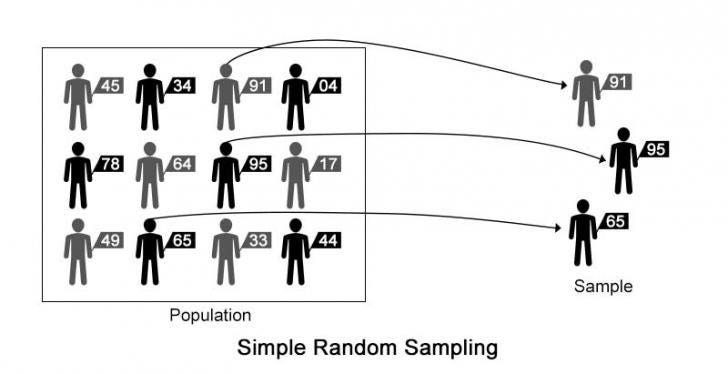
Random Sampling:
In Random Sampling everyone in the population has an equal chance of being selected.
- Example:If you put all the names of the kids in your city in a hat and draw 100 names, you’re doing random sampling.
Stratified Sampling:
The population is divided into smaller groups (called strata) based on a characteristic (like age or grade), and you randomly sample from each group.
- Example: If you divide the kids into age groups (6–8 years old, 9–12 years old), and then randomly pick kids from each group, that’s stratified sampling.

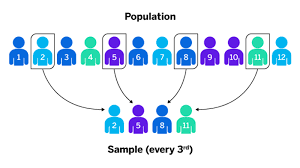
Systematic Sampling:
Systematic sampling is a probability sampling technique in which every kthk^{th}kth member of a population is selected to be part of the sample, where kkk is the sampling interval.
- Example: If you have a list of all the kids, and you pick every 3th kid on the list, that’s systematic sampling.
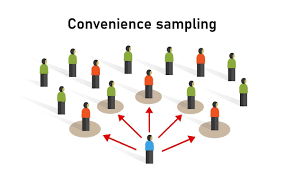
Convenience Sampling:
Convenience sampling is a non-probability sampling method where participants are selected based on their easy accessibility and proximity to the researcher. This means the sample consists of individuals who are readily available, without random selection.
- Example: If you just ask kids who are at your local park, that’s convenience sampling. It’s not random but quick and easy.